
INTRODUCTION
Of all the technological revolutions in the 21st century, proliferation of mobile and wireless devices, the severing of the cord has been one of the most visually symbolic. The shift from wired to wireless audio, epitomized by the sleek, white casings of popular earbuds, promised a future of unbridled freedom. No more untangling knots, no more phones yanked from pockets, just seamless, untethered sound. This convenience, however, has been shadowed by a persistent, low-frequency hum of concern: what is the cost of this wireless liberty, particularly regarding our health? When headlines scream that “Wireless AirPods produce 150 times more radiation than wired models,” it’s enough to give any daily user pause. This claim, while often sensationalized, points to a genuine scientific debate, forcing us to re-evaluate our audio choices. The central question becomes: in the pursuit of auditory pleasure and convenience, which path is the most prudent—wireless, wired, or a complete shift away from in-ear devices altogether?
To answer this, we must first move beyond the alarming headlines and understand the nature of the radiation in question. The term “radiation” conjures images of nuclear reactors and X-ray machines, but it simply refers to energy that travels through space. This energy spectrum is vast, ranging from high-frequency, high-energy ionizing radiation (like gamma rays and X-rays), which has enough power to knock electrons out of atoms and damage DNA, to low-frequency, low-energy non-ionizing radiation, which does not.

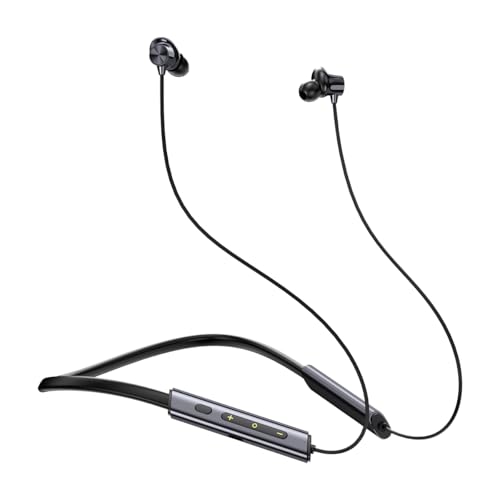

The radiation emitted by all our wireless devices—Bluetooth headphones, Wi-Fi routers, and cell phones—falls squarely into the non-ionizing category. Specifically, Bluetooth devices like wireless earbuds use a form of radiofrequency (RF) electromagnetic fields (EMF). They communicate with your phone by sending and receiving data packets via low-power radio waves, typically in the 2.4 to 2.48 GHz frequency range. This is the crucial context for the “150 times more radiation” claim. It is technically accurate when comparing the RF output of a active Bluetooth signal to the negligible RF from a passive wired connection. However, it is a comparison of something to almost nothing. A wired headphone, functioning as a simple analog speaker, produces virtually no RF radiation unless it has an integrated microphone or DAC, which might produce a minuscule amount.
The real debate, therefore, is not about the existence of this radiation, but its biological impact. The official stance from major global health bodies like the World Health Organization (WHO) and the U.S. Food and Drug Administration (FDA) is that, based on the preponderance of current scientific evidence, low-level EMF from Bluetooth devices is not a proven health risk. They point to the fact that the power output of Bluetooth is incredibly low—typically about 1000 times less than that of a cell phone held to your ear. The International Commission on Non-Ionizing Radiation Protection (ICNIRP) sets safety guidelines for EMF exposure that are far above the levels produced by consumer devices.
However, a growing chorus of scientists and medical professionals urges a principle of caution. Their concerns are rooted in several key arguments:
- The Proximity Factor: While the power is low, wireless earbuds are placed directly into the ear canal, in very close proximity to sensitive brain tissue and the inner ear. This creates a localized exposure that is significantly higher than, for example, a Wi-Fi router across the room. Dr. Jerry Phillips, a biochemistry professor who was part of a 2015 international petition to the UN expressing concern about EMF, has highlighted that this placement “raises serious concerns” due to the fragile tissues of the area.
- The Nature of the Signal: Unlike the relatively constant RF field of a cell phone call, Bluetooth uses a pulsed signal. Some researchers hypothesize that these pulses could have different biological effects than a continuous wave, potentially disrupting cellular communication.
- The Precautionary Principle: This principle states that in the face of possible, but not yet conclusively proven, risk, we should err on the side of caution. Thousands of studies on EMF have yielded mixed results. While many show no adverse effects, others have suggested possible links to oxidative stress in cells, blood-brain barrier permeability, and even certain types of cancer in animal studies, though these are often contested and difficult to replicate. The WHO’s International Agency for Research on Cancer (IARC) has classified RF electromagnetic fields as a “Group 2B possible carcinogen,” a category that also includes pickled vegetables and coffee. This is not a declaration of danger, but an admission that we cannot yet definitively rule it out.
For the daily or heavy user—the person who wears their wireless earbuds for hours on end during work, commutes, and workouts—this uncertainty is paramount. The cumulative, long-term exposure from a device used 6-10 hours a day is a variable that simply hasn’t been studied over a sufficient timeframe. We are, in a sense, participating in a global, uncontrolled experiment.
The Contenders: A Comparative Analysis of Your Audio Options
wireless communication devices, Given this landscape of convenience versus uncertainty, let’s dissect the three primary options with an educational and critical eye.
Option 1: The Wireless Earbud (The Convenience King)
Wireless earbuds represent the pinnacle of modern audio convenience. Their benefits are undeniable:
- Untethered Freedom: The ability to move, exercise, and work without being physically connected to a device is a genuine quality-of-life improvement for many.
- Seamless Ecosystem Integration: They often work flawlessly within brand-specific ecosystems, offering features like instant pairing, voice assistant integration, and spatial audio.
- The Demise of the Jack: With most modern smartphones omitting the headphone jack, they have become the default, not merely an alternative.
However, from a health-conscious perspective, the drawbacks are significant:
- Constant RF Exposure: While in use and connected, they are continuously emitting and receiving RF signals directly into your head.
- Battery and E-Waste: They contribute to the cycle of charging, battery degradation, and electronic waste.
- The Precautionary Deficit: For the heavy user, they represent the option with the highest potential unknown risk.
Mitigation Strategy for Wireless Users: If you choose to continue using wireless earbuds, you can minimize your exposure. Use them for shorter durations. Take them out during calls and use the speakerphone function. When not actively listening to audio, place one bud back in its case to halve the exposure. Avoid sleeping with them in.
Option 2: The Wired Headphone (The Prudent Classic)
Wired headphones are the established, time-tested alternative. Their case is compelling from a safety and quality standpoint:
- Negligible Radiation: They produce no meaningful RF radiation. The signal traveling through the wire is an electrical audio signal, not a radio wave. This directly addresses the core concern of the “150 times more” statistic.
- Superior Audio Fidelity (Often): For audiophiles, a high-quality wired connection via a dedicated DAC (Digital-to-Analog Converter) can provide superior, lossless audio quality that Bluetooth’s compressed codecs cannot match.
- Reliability and Zero Latency: No batteries to die, no pairing issues, and no audio lag, making them ideal for gaming and professional audio/video editing.
Their disadvantages are largely tied to the modern tech landscape:
- The Inconvenience of the Cord: Tangling and the physical tether to the device are the very problems wireless tech sought to solve.
- The Adapter Dilemma: The lack of a headphone jack on most phones forces users to rely on dongles, which can be easily lost, add another point of failure, and often degrade audio quality if cheaply made.
- Potential for Other Radiation: It’s worth noting that if you have your phone in your pocket with wired headphones on, you are still exposed to the phone’s cellular and Wi-Fi RF emissions, though they are farther from your brain.
Option 3: No In-Ear Devices / Alternative Headphones (The Holistic Shift)
This is the most conservative and perhaps most health-conscious approach. It involves moving away from devices inserted into the ear canal altogether, opting instead for over-ear or on-ear headphones.
- Over-Ear (Circumaural) Headphones: These are the champions of this category. The speaker drivers are housed in large cups that sit around the ear, not inside it. This creates a critical distance between any RF source (if wireless) and your brain tissue. If you use wired over-ear headphones, you get the twin benefits of zero RF exposure and exceptional sound quality due to larger drivers and better acoustics.
- On-Ear (Supra-aural) Headphones: These sit directly on the outer ear. They are a middle ground, still creating more distance than in-ear models but less than over-ear ones.
The benefits of this shift are profound:
- Dramatically Reduced EMF Exposure: With wired over-ear headphones, your EMF exposure from the audio device is effectively zero. Even with wireless over-ear models, the RF transmitter is an inch or more away from your skull, significantly reducing the specific absorption rate (SAR) compared to an in-ear device.
- Hearing Health: In-ear headphones (both wired and wireless) can promote earwax buildup, increase the risk of ear infections, and, if used at high volumes, can cause hearing damage due to the direct delivery of sound deep into the ear canal. Over-ear models are generally considered safer for long-term hearing health.
- Situational Awareness: High-quality over-ear headphones often feature better passive noise isolation, but many also include “transparency” or “ambient sound” modes that can be safer for outdoor activities than noise-cancelling in-ear buds that block out all environmental sound.
The only real downside is portability. Over-ear headphones are less compact and less discreet than a tiny set of earbuds.
which layer is used for wireless connection in iot devices
In the context of the OSI Model or the IoT World Forum Reference Model, wireless connectivity is handled at the lowest layers of the architecture.
1. The Physical Layer (Layer 1)
This layer is responsible for the actual transmission of raw bits over a physical medium. In wireless IoT, this involves:
- Radio Frequencies (RF): Converting data into radio waves.
- Modulation: Techniques like FHSS or DSSS used in Wi-Fi and Bluetooth.
- Hardware: The actual radio chips and antennas on the device.
2. The Data Link Layer (Layer 2)
While the Physical Layer handles the “signal,” the Data Link Layer (specifically the MAC sublayer) manages how the device accesses the wireless medium.
- Medium Access Control (MAC): Ensures that two devices don’t transmit at the same time (collision avoidance).
- Addressing: Uses MAC addresses to identify specific hardware in a local wireless network.
Common Wireless Protocols by Layer
Most IoT “wireless” technologies actually span both Layer 1 and Layer 2:
| Technology | Typical Range | Standard |
| Wi-Fi | Short (30-100m) | IEEE 802.11 |
| Bluetooth/BLE | Personal (10m) | IEEE 802.15.1 |
| Zigbee | Mesh (10-100m) | IEEE 802.15.4 |
| LoRaWAN | Long (5-15km) | LoRa PHY |
Summary: If you are referring to the “hardware” connection, it is the Physical Layer. If you are referring to how devices communicate locally without wires, it is a combination of the Physical and Data Link Layers.
Wireless charging allows devices to recharge their batteries without a direct cable connection. This technology is primarily used for smartphones, wearables, and increasingly for laptops and electric vehicles.
How It Works: Electromagnetic Induction
Most consumer wireless charging operates on the principle of electromagnetic induction.
- Transmitter: A copper coil in the charging pad creates an alternating magnetic field when electricity flows through it.
- Receiver: A matching coil inside your device (e.g., phone or watch) captures this magnetic field and converts it back into electrical current to charge the battery.
Key Standards & Technologies
The industry is currently dominated by three main standards that determine compatibility:
- Qi (pronounced “Chee”): The global universal standard developed by the Wireless Power Consortium (WPC). It is found in almost all wireless-capable Androids and iPhones.
- MagSafe / Qi2: Apple’s proprietary (and now shared) system that uses a ring of magnets to ensure the device is perfectly aligned with the charging coil. Qi2 is the new open standard that brings this magnetic alignment to non-Apple devices.
- Magnetic Resonance: A newer method that allows for “spatial freedom,” meaning the device can be a few centimeters away from the pad or charge through thicker surfaces like tabletops.
Common Wireless Charging Devices
- Smartphones: iPhone 8 and later, Samsung Galaxy S/Z series, Google Pixel 3 and up.
- Wearables: Apple Watch (uses a proprietary version of Qi), Samsung Galaxy Watch, and various Fitbit models.
- Audio: AirPods Pro and AirPods (3rd Gen) with wireless cases, Sony WF-1000XM series.
- IoT & Accessories: Computer mice (like the Logitech G Pro), smart pens, and medical implants.
Summary Table
| Feature | Inductive (Qi) | Magnetic Resonance |
| Distance | Contact required (0–4 cm) | Short distance (up to 10 cm) |
| Alignment | Critical (must be centered) | Flexible (loose alignment) |
| Efficiency | High (80%+) | Moderate (70–80%) |
| Common Use | Phones, Earbuds | Furniture, Laptops, EV |
The Verdict: An Educated and Persuasive Path Forward
After weighing the evidence, the risks (both known and potential), and the benefits, the most rational and health-conscious choice becomes clear. For the daily or heavy user, the best option is to primarily use wired over-ear headphones.
This choice is a powerful synthesis of safety, quality, and practicality. It completely eliminates the concern over direct, close-proximity RF radiation to the brain. It provides superior audio fidelity and is better for your long-term hearing health. It is the application of the Precautionary Principle in action: we may not have definitive proof of harm from wireless earbuds, but we have a perfectly viable, zero-risk alternative that offers equal, if not better, performance.
This is not a call to panic or to discard your wireless earbuds entirely. They remain a marvel of engineering and an incredibly useful tool for specific situations where convenience is paramount—a short workout, a hands-free call while cooking, or a commute where absolute portability is key. The goal is not elimination, but mindful moderation.
Reframe your thinking: let wired, over-ear headphones be your default—your daily drivers for work, extended music listening, and gaming. Relegate your wireless earbuds to the role of a specialized tool for specific, often active, scenarios. By doing so, you dramatically reduce your cumulative EMF exposure without sacrificing the benefits of modern audio technology.
In the end, the narrative is not about fear, but about informed empowerment. The wireless future is here, but it does not have to be an all-or-nothing commitment. The cord, that seemingly antiquated tether, may in fact be the very thing that grants us the ultimate freedom—the freedom from future uncertainty. It is a simple, elegant, and proven technology that allows us to enjoy the art and science of sound while placing our long-term well-being at the forefront. In a world saturated with invisible signals, choosing the wired path is a conscious, educated, and profoundly sensible act of self-care. Make the switch. Your future self may thank you for the silence.